Educational Birds
The educational birds are a very special part of the Ohio Bird Sanctuary's outreach. They give the public a chance to see magnificent animals up close and personal. Some of these birds started their lives in captivity while others were hatched in the wild. Through unfortunate circumstances such as injury, or illness, they can no longer survive in the wild.
Below is a list of our current educational birds. They reside at the Sanctuary but are not always onsite.Much of their time is spent traveling with a staff member to schools and events. You can click on the birds name to find out more about their species and each birds personal history.
Barred Owl
The Barred Owl (Strix varia) is a medium-size owl with a large round head and dark brown eyes. The Barred Owl lacks ear-tufts and is easily identified by the vertical bars on its chest.The Barred Owl inhabits wet, wooded areas preying on rodents, reptiles and amphibians. Their call can be heard resounding through night “Who cooks for you, who cooks for you all”.
Barkley
Barkley suffered a severe wing injury. He will be ready for programs in 2012.Barn Owl
The Barn Owl (Tyto alba) is a medium-size owl with a white heart-shaped face and tawny back and tail. The Barn Owl nests in caves, barns, hollow trees and abandoned buildings. Once common in Ohio, the Barn Owl is now struggling for its survival due to the loss of grassland habitat. These beautiful birds depend on open moist grassland habitat for their primary prey source, the Meadow Vole.
Monty
Monty was born in captivity at a facility in North Carolina. Barn owls are common throughout the world. Monty is an European barn owl. This makes him much smaller and lighter colored than his American counter parts. Monty is one of the Sanctuary's favorite program birds because of his outgoing personality.Great Horned Owl
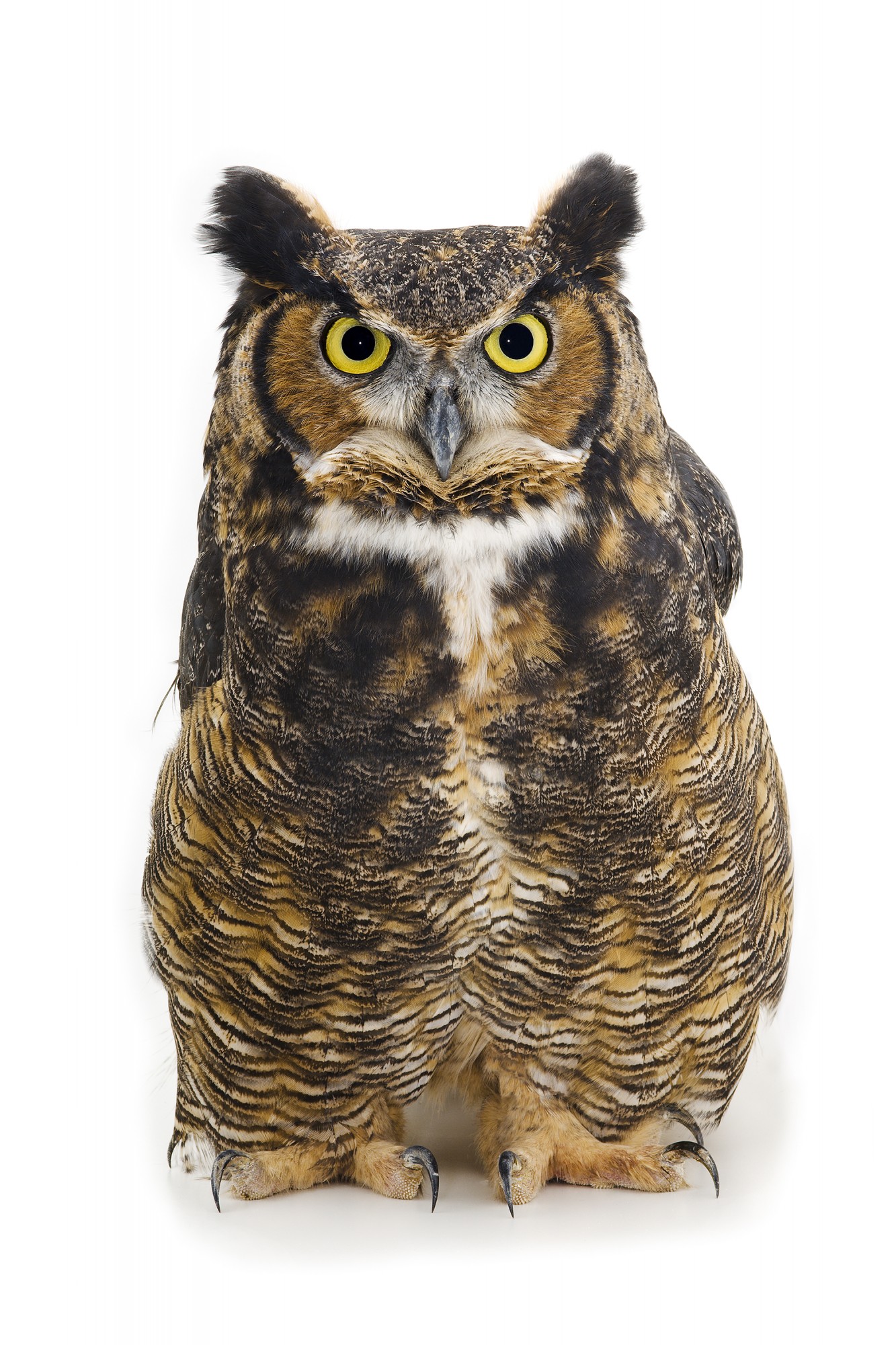
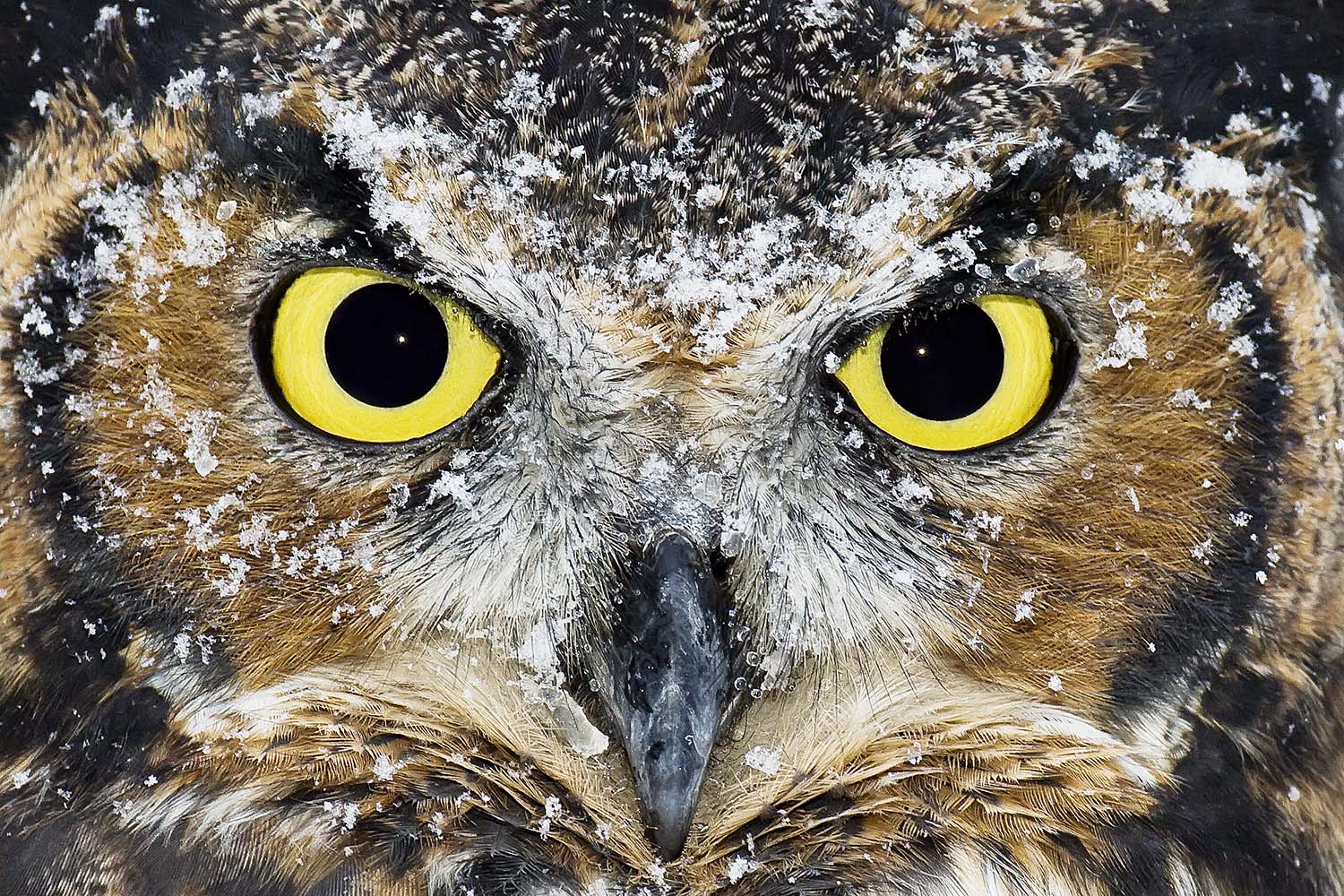
The Great-horned Owl (Bubo virginianus) is a large owl with bright yellow eyes and distinct tufts of feathers atop its head. They have a white bib which can be seen in flight or when they are extending the throat during hooting. The Great horned is often called the "flying tiger" because of its aggressive hunting methods.One of Ohio's most common species of owl, the Great Horned raises it young in old crow and Red-tail Hawk nest or in the hollow of a tree. The owls breed as early as January. The eggs hatch in about four weeks. The downy chicks grow rapidly and learn to fly within three months of hatching. The young learn to hunt rodents, snakes, mammals and even other owls.
Seymour
Seymour fell out of his nest as a baby and injured his wing. He is now unable to fly. Seymour has become a great ambassador for the Sanctuary and is a favorite with visitors because of his large size and big yellow eyes.Eastern Screech Owl
The Screech-Owl (Otis asio) is a small owl with ear-tufts and large, yellow eyes. The Eastern Screech-Owl has two color phases; red or grey. These small owls inhabit woodlots, parks and residential areas and prefer to nest and roost in hollow trees. Nesting boxes can be erected to attract this small predator to your backyard. Screech-Owls primarily prey on small rodents and insects.
Lazarus
Lazarus was struck by a car and thought to be dead before he surprised staff at the Ohio Bird Sanctuary by making a miraculous come back! Today Laz still has eye and brain damage but makes an excellent addition to the Sanctuary's bird staff.Peregrine Falcon
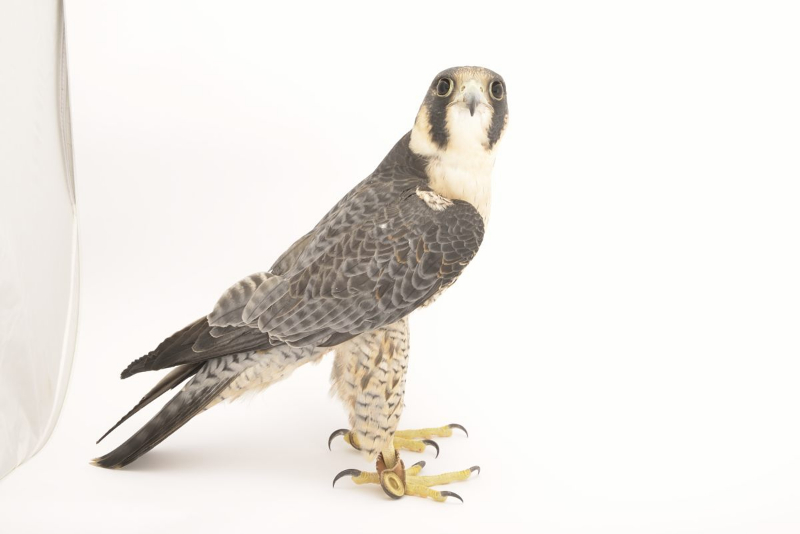
The peregrine falcon is the fastest known species of bird. They have been clocked at 250 mph in power dives. They take down their prey in spectacular aerial maneuvers. Peregrines are able to capture birds in flight but often strike their prey in head at great speeds then return to gather their prize and carry off to a safe location to dine. The peregrine inhabits cliff ledges usually along the water. They have adapted to living in large cities on account where buildings simulate cliff ledges and provide an endless supply of pigeons for food. Ohio has Peregrine pairs nesting in six major cities.
The peregrine was on the endangered list in Ohio by the end of the 1960 due to the use of pesticide DDT. This pesticide is passed easily through the food chain and become concentrated in the species that are at the top. The peregrine became unable to produce young and the species declined rapidly. Through the ban of DDT and reintroduction programs established by the peregrine fund. This species is on its way to a healthy recovery.
Legacy
Legacy is a retired falconry bird from the state of New York. She came to the Sanctuary to live out her golden years when she became too old to participate in the sport falconry.American Kestrel
The American Kestrel (Falco Sparverius) is the smallest falcon species in Ohio. Nicknamed the sparrow hawk, this small falcon can be seen hunting meadows and roadways from its perch on a power line. Kestrels are cavity nesters and will often raise young in hollow trees, buildings and man-made bird houses. Kestrels are one of the few birds of prey that are sexually dimorphic(show a difference in color between the male and female.) The males have slate blue wings, a rusty-red tail and a buff- colored chest with black teardrops. The females wings are speckled brown with a brown banded tail and speckled chest.
Ditch
Ditch was found in a ditch after being struck by a car. He suffered a bad break in his wing that healed imperfectly. Ditch is unable to fly fully and cannot be returned to the wild, but has a new job as an ambassador for his species.Red-tailed Hawk
The Red-tailed Hawk (Buteo Jamaicensis) is the largest hawk species in Ohio. Nicknamed the chicken hawk, this large bird can be seen hunting meadows and roadways from its perch on a power pole or in a dead tree. They prefer to dine on rodents rabbits and snakes. Both sexes are the same color. The female red-tail is larger of the sexes. Adults have a reddish colored tail, brown back and light colored chest. Juveniles ( birds not of breeding age) have a brown-banded tail. They don't molt in a red-tail until they are of breeding age. Red-tails make their nests from sticks and grass and raise up to three young a year.
Mishka
Mishka was struck by a car as a juvenile and brought to the Sanctuary. At first glance little seemed wrong, but she proved to have a large amount of brain damage and some sight issues. She is now a wonderful educational bird.James
James came to OBS as a car stike. He is not releasable as a result of many of his injuries. James is a quick learner and will soon be a part of the OBS teaching bird staff.Red-shouldered Hawk
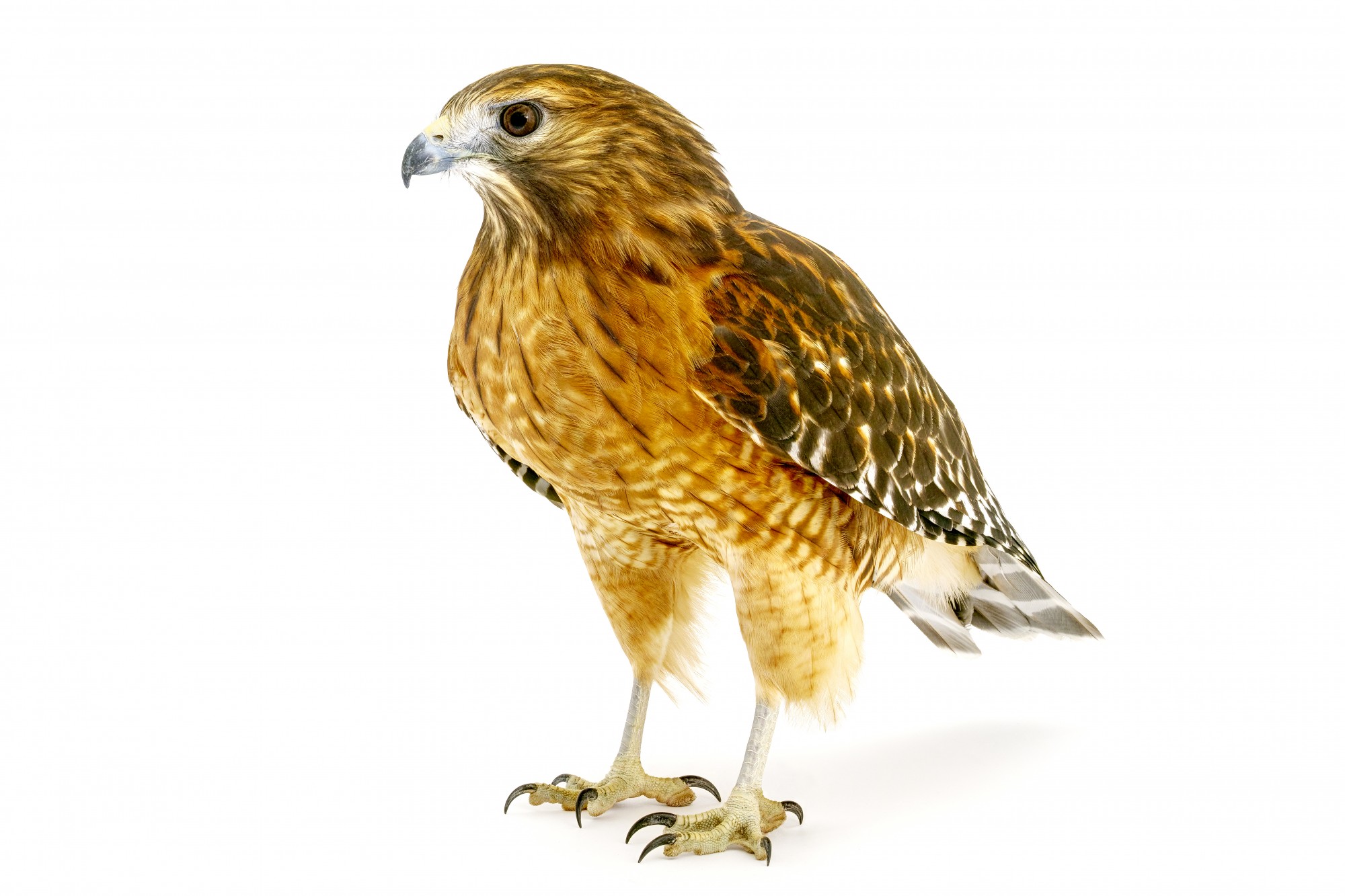
The Red-shouldered hawk (Buteo lineatus)is a smaller, more compact bird than it's cousin the Red-tail. It flies with quick, choppy wingbeats. Found in mature lowland forests with clearings and water, this bird feeds mainly on reptiles, amphibians, small mammals and birds. It has a very loud voice and can frequently be heard calling "Kyeeear...Kyeeear"Diesel
Diesel is a young falconer's bird who was being raised to hunt small game for his owner. He is now being trained as a program bird for OBS.Turkey Vulture
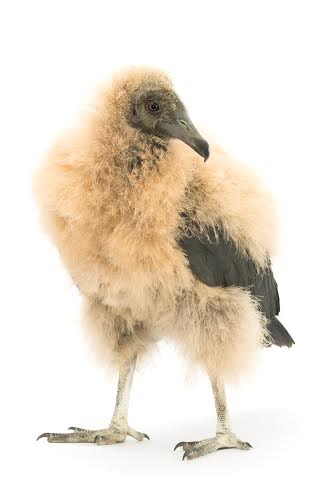
Turkey Vultures feed primarily on carrion (dead animals). Identified by a characteristic red head(attained in their second year), the Turkey Vulture flies with their wings held in an upward V. The juveniles have a dark head and are often mistaken as Black Vultures. Turkey Vultures nest on the ground in fallen trees, in caves or old barn foundations.
Ichabod
Ichabod was mistakenly taken from the wild while in the egg and became imprinted on people after he hatched. Because he does not recognize his own species, Ichabod now serves as his species ambassador.Harris Hawk
Native to the Southwestern United States the Harris Hawk is found in the deserts and other arid regions of the U.S. and Mexico. t This species hunts in family units with the previous years young, often helping raise the current year's brood. Long, scaly legs help this hawk flush prey out of thorny shrubs.
Phoenix
Phoenix is a long way from home in Ohio, however, he fits in very nicely with the other education birds. Phoenix was born in captivity and bred for the sport of falconry. The Sanctuary acquired Phoenix, in his younger years, to do free-flight performances .Tawny Owl
The Tawny is a southern European species of owl related to the Barred and Spotted owl. The Tawny owl is an urban species living a similar environment to the eastern Screech owl. They feed on small rodents, amphibians and insects. Life expectancy, for the Tawny, is 15 to 20 years.